
Try the method in choice reaction time test. Keep the task and input settings visible when comparing results.
Why is reaction time important in football during changing play?
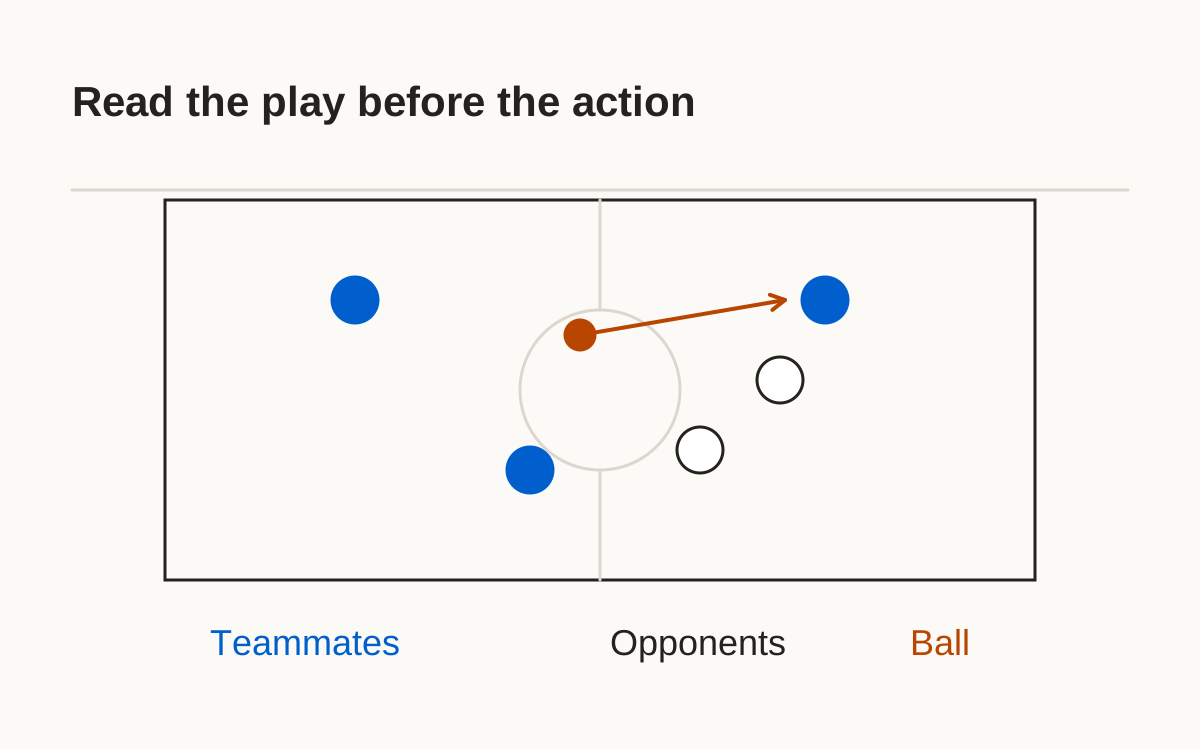
Reaction time matters in football because options can change while a player chooses an action. In an illustrative association-football example, a midfielder notices a passing lane and begins a pass before an opponent closes it. The useful response includes identifying the lane and selecting an action, not moving whenever any signal appears.
Define the cue: an opponent’s touch, a teammate’s movement, or a changed ball direction. Then define the endpoint, such as first step or ball contact. Those produce different intervals. A screen cue and button press omit much of the information and movement in a match.
- Name the match cue.
- Identify available actions.
- Separate initiation from completion.
- Review the decision and outcome.
Why is reaction time important in football without being the whole skill?
A rapid wrong choice and a well-chosen action after reading the play early are different performances. Discuss information, decision, and execution together instead of replacing the whole skill with one time.
Reaction time in sports: where does anticipation fit?
Anticipation uses information available before a final event. Scanning, positioning, and reading movement can shape the actions a player prepares. A goalkeeper anticipating a shot has different information from a participant waiting for an unpredictable screen cue. Keep those conditions visible rather than treating both as the same measurement.
FIFA’s author-presented scanning brief provides association-football research context. It does not validate a browser score as a player ranking. In a practice example, note which information was available early. Learning a fixed cue sequence may improve that particular drill without demonstrating a broader response to unfamiliar play.
This author-presented research brief concerns scanning and match context in association football. It does not validate a browser reaction score as a player ranking. FIFA Training Centre: Scanning activity in elite youth football players.
Football reaction time: what does a complete action include?
A complete action includes observing, selecting, initiating, and executing. A defender may notice a runner, choose a direction, begin moving, and continue tracking. First movement answers a narrower question than a successful interception. These stages organize the example; they are not independently measured processing times.
An aim game adds target search and pointer movement, and a choice game adds response selection. Neither recreates pitch dimensions, opponents, body movement, or team tactics. American football has different plays and cues; this guide’s association-football illustrations should not be generalized to every sport called football.
| Endpoint | Meaning in the example |
|---|---|
| First step | Movement initiation |
| Ball contact | Later action completion |
| Interception | Outcome with context and execution |
How can you discuss practice without promising match transfer?
An original observation checklist can record cue, available options, selected action, first movement, outcome, and advance information. It helps describe a coach-supervised drill without promising match transfer. A correct decision made slowly differs from a rapid decision that loses possession.
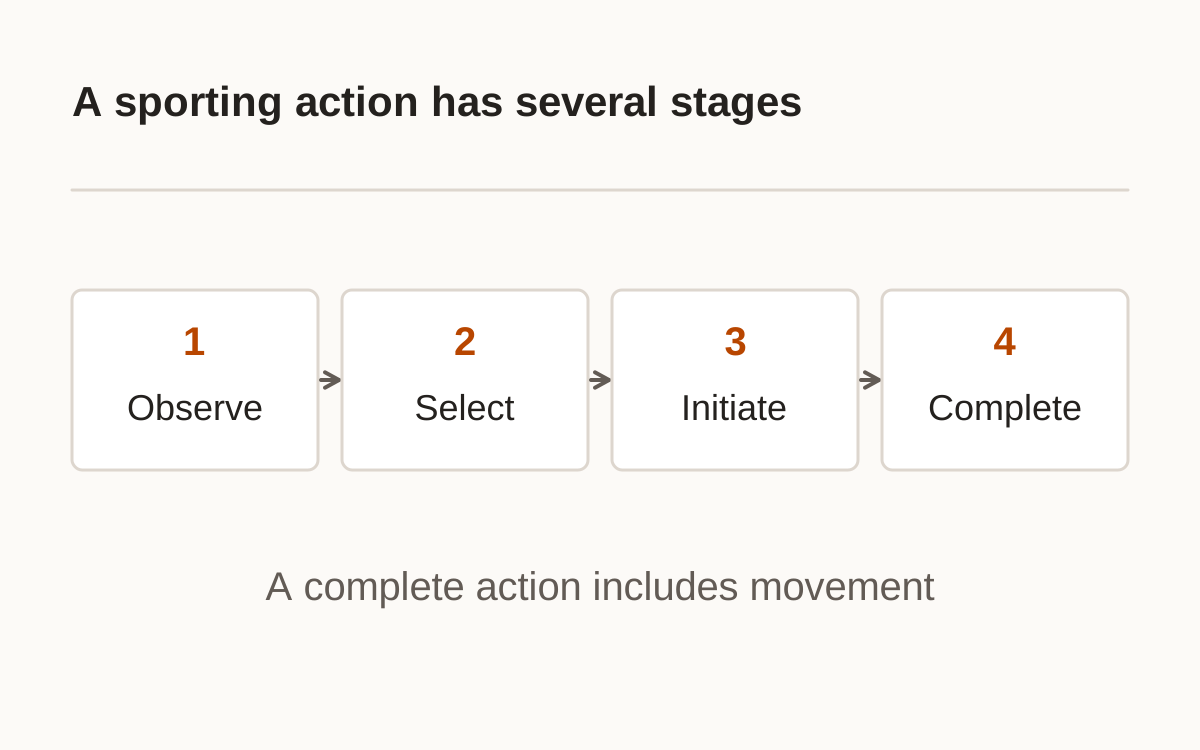
Treat browser changes as task-specific until relevant evidence supports more. Avoid invented player percentiles, millisecond thresholds, or selection judgments from a single button score. Preserve accuracy, movement quality, and match context alongside timing so the observation describes something useful about the activity.
Frequently asked questions
Which kind of football does this guide use?
The worked examples use association football; American football has different plays and cues.
Does a low browser score make someone a better player?
The site has no validated model for that inference.
Is anticipation the same as waiting for a cue?
No. Anticipation uses earlier contextual information and should be described separately.
Can goalkeeper actions be reduced to a button press?
No. Positioning, selection, movement, and match context remain involved.
Is a practice example proof of improvement?
No. A practice design and evidence of a match outcome are different things.
Sources and method
- FIFA Training Centre: Scanning activity in elite youth football players · checked 2026-10-21. Read within its original procedure; this site’s examples and rules are separate.
Published October 21, 2026 · human-reactiontimetest.com · Report a correction