
Try the method in how to improve reaction time. Keep the task and input settings visible when comparing results.
Which factors affect reaction time in a particular task?
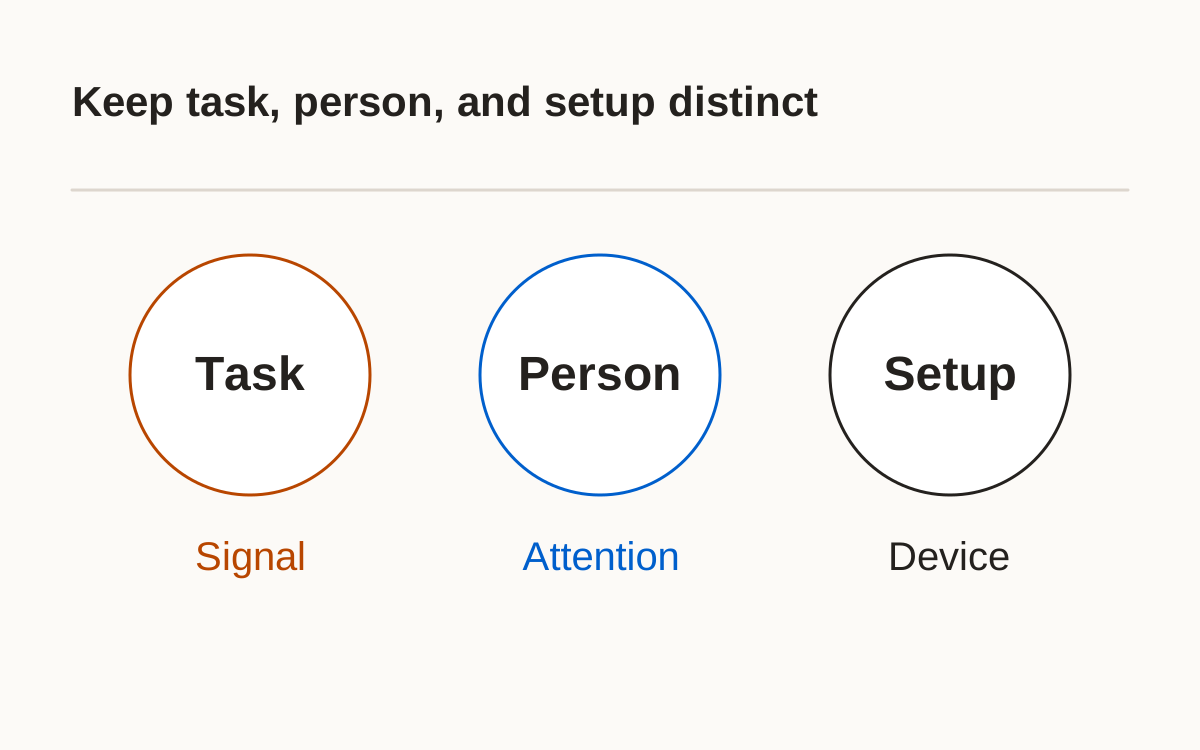
Which factors affect reaction time depends on the task and measured interval. Organize influences into task demands, participant state or familiarity, and setup. A choice task differs from one response to a signal; a touch input differs from a mouse path. No universal adjustment can account for every such change.
These categories organize records rather than diagnose people. A browser task cannot identify hormone levels, illness, or drug effects from one result. The original research cited here describes its own methods, not the cause of a visitor’s score. Begin with what was observed and keep unmeasured explanations explicitly uncertain.
- Keep task and input explicit.
- Note known setup changes.
- Retain trials and errors.
- Compare compatible sessions.
Which factors affect reaction time without being identifiable from one score?
A score combines task, performance, and measurement path. One value cannot identify which influence caused a change. Record known conditions and repeat compatible sessions before attaching a physiological explanation.
The original paper describes its own simple-response task and equipment calibration. Its measurements are not norms for this browser protocol. Woods and colleagues: Factors influencing the latency of simple reaction time (2015).
How do task demands and familiarity change the comparison?
Task demands can include cue detection, response selection, inhibition, target search, or pattern recall. Each changes the required activity. Accuracy also matters: rapid wrong choices describe different behavior from rapid correct ones. Read every outcome count alongside the latency summary.
Familiarity may involve learning instructions, a key mapping, or a predictable sequence. Improvement after practice can concern that task without proving transfer to sport or work. Log practice exposure and avoid changing multiple procedures while describing the result as one general improvement. A specific measured change is more useful than an unsupported broad promise.
| Group | Record |
|---|---|
| Task | Cue, mapping, validity rules |
| Person and strategy | Familiarity, pace, interruptions |
| Setup | Input, browser, display, device |
Is reaction time random error or a fixed measurement effect?
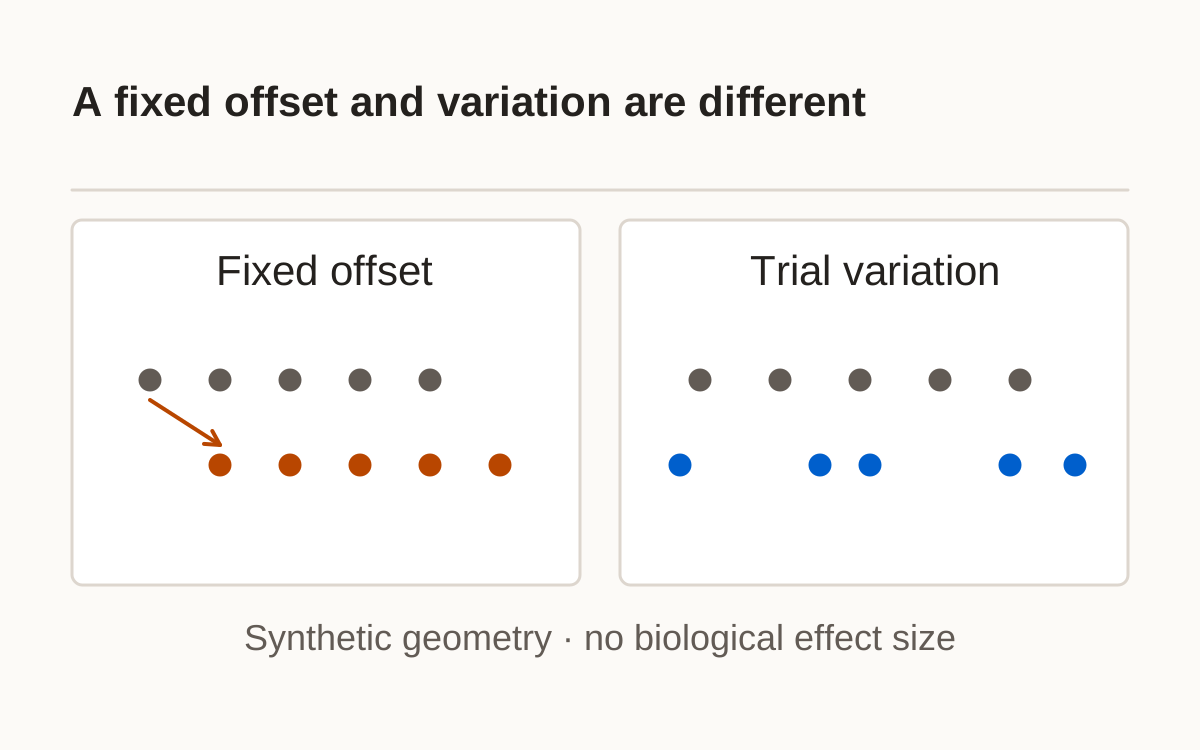
Fixed offset and trial variation are different issues. In a synthetic illustration, adding 20 ms to every value shifts a series without changing its spread. Variable differences between trials can widen the spread. Neither example tells you the real device delay or its cause.
Do not remove a guessed offset and label the remainder calibrated. Repetition can reveal variation in observations, while reference measurements are needed to quantify equipment timing. Software-clock precision, physical accuracy, and behavioral variation can coexist. A single median does not separate them or justify assigning one exact source to a difference.
How should you log conditions without inferring a medical cause?
Log protocol, input, raw trials, errors, date, and material conditions you actually know. When a later session differs, check whether the comparison changed. Note a different device or interruption without assigning it a precise millisecond effect. Describing the observation carefully is more useful than inventing a cause.
The cited sleep-loss study concerns vigilant attention under its own experimental procedure; it does not explain your game score. This page offers no caffeine dose, hormone advice, medication change, or sleep-deprivation experiment. Health concerns call for an appropriate assessment. The practice tools remain recreational activities with limited and explicit outcomes.
This original experimental study concerns vigilance and sleep loss in its own procedure. It does not identify a cause for your browser score or validate this website’s practice drills. Yang and colleagues: Sleep deprivation enhances inter-stimulus interval effect on vigilant attention performance (2018).
Frequently asked questions
Can one slow result identify a health problem?
No. This site does not infer a cause or medical condition from a game score.
Are practice and broad transfer the same?
No. Familiarity with a task does not automatically establish a wider outcome.
Does this guide recommend caffeine or hormones?
No. It does not prescribe substances or interventions to change scores.
Are fixed delay and trial variation identical?
No. A stable measurement offset and variation between trials describe different issues.
What is a useful next step after a changed score?
Repeat a compatible session and note setup changes, rather than assigning a cause from one value.
Sources and method
- Woods and colleagues: Factors influencing the latency of simple reaction time (2015) · checked 2026-10-21. Read within its original procedure; this site’s examples and rules are separate.
- Yang and colleagues: Sleep deprivation enhances inter-stimulus interval effect on vigilant attention performance (2018) · checked 2026-10-21. Read within its original procedure; this site’s examples and rules are separate.
Published October 21, 2026 · human-reactiontimetest.com · Report a correction