
Try the method in reaction time test. Keep the task and input settings visible when comparing results.
How could the fastest human reaction time be verified?
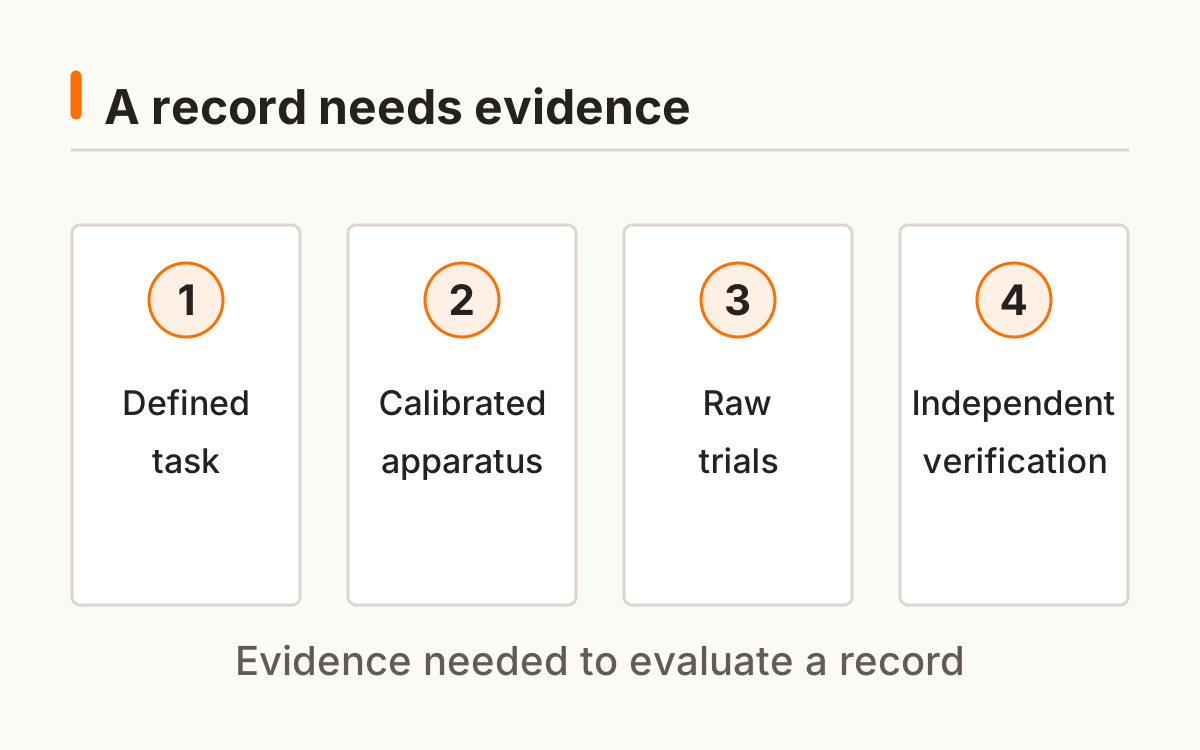
Verifying the fastest human reaction time would require a clearly defined task, calibrated timing, reproducible procedures, and evidence about anticipation. A small number displayed by a website is not sufficient evidence. The measured onset and endpoint must be known before the number can be compared.
This guide does not identify a world-record holder for the site’s protocol. No comparable validated record dataset is available here. The useful question is what evidence would make a reported result interpretable, rather than which unsourced screenshot contains the smallest value.
- Identify the exact stimulus and required response.
- Explain how physical and software timing were calibrated.
- Retain repeated trials and early-response handling.
- Provide an original traceable source and full procedure.
An alleged fastest human reaction time needs an audit trail. A screenshot shows what an interface displayed, but does not establish calibration, stimulus, input source, or trial-selection rules. Those omissions matter even when the displayed number appears plausible.
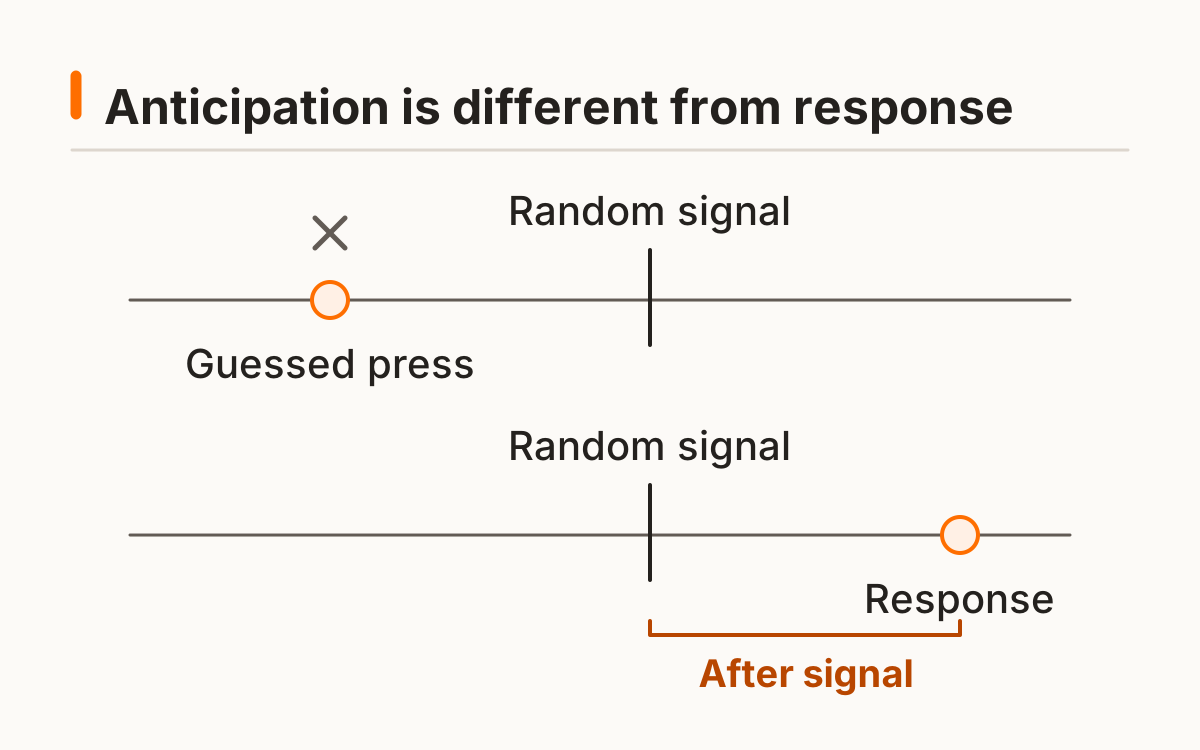
Can an early guess establish the fastest human reaction time?
An early guess cannot establish a valid response record because the action may have been prepared before the signal. A randomized wait reduces simple countdown strategies but does not prove every accepted trial was unanticipated. Retain the full sequence of valid and early responses instead of choosing only the smallest number.
For research context, this original paper describes its own simple-response methods and equipment timing. Its findings do not calibrate this browser task. Woods and colleagues: Factors influencing the latency of simple reaction time (2015).
World record reaction time: what evidence is missing?
A world record reaction time claim needs more than a caption or certificate generated from one trial. Look for the original procedure, raw trials, equipment description, and a named source that actually recognizes the claimed category. Different tasks cannot be ranked as one event without a valid comparison method.
This page does not create a record certificate or name an official category on someone else’s behalf. An online best-of-many score is a selection from attempts, not a representative estimate of ordinary performance. Keep that distinction visible when sharing a particularly quick result.
A record category needs a stable definition. The shortest target hit, smallest button interval, and fastest completed movement describe different achievements. Combining them into one title removes the conditions required for a meaningful comparison.
Fastest reaction time: why are devices relevant?
The fastest reaction time on one setup can include less equipment delay, a different endpoint, or an anticipated press. A browser measures a software interval, while a laboratory may use physical onset instrumentation and corrections. Milliseconds are the same unit but do not guarantee the same measurement.
Neither a negative interval nor an unexamined tiny result establishes biological capability. The site rejects invalid intervals and makes no guessed hard threshold for human impossibility. Investigate the method and repeat the protocol rather than turning a suspicious value into a universal claim.
The fastest reaction time shown after a device change may include a changed measurement path. Retain that setup information. This site does not subtract an assumed hardware delay to estimate a biological minimum.
What should you do with an unusually small result?
Repeat the same task and inspect the full distribution. Check whether the result followed an early press, a predictable sequence, a focus change, or an input mismatch. Save the protocol and raw trials if you want to discuss an unusual result.
A fastest human reaction time claim should survive scrutiny outside the page that displayed it. Your personal median and false-start count are usually more useful for repeating this browser task. Treat a single extreme as something to examine, not as an automatic record.
Keep unusual trials in context: how many attempts preceded the score, and were early responses frequent? Repeat the procedure and inspect the series before treating an isolated extreme as the fastest human reaction time or assigning a certificate.
Frequently asked questions
Is a zero-millisecond result a record?
It is not sufficient evidence of a verified response record.
Can anticipation produce a low number?
A timed guess can contaminate what is meant to be a response task.
Does this page name a record holder?
No verified comparable holder is asserted.
Is the best trial my normal score?
It describes one selected trial, not your typical session.
Can different signal types share one ranking?
They need compatible procedures before a meaningful comparison.
Sources and method
Woods and colleagues: Factors influencing the latency of simple reaction time (2015). Read this source within its own method; the protocol and synthetic examples on this page describe this site’s implementation.
Published October 20, 2026 · human-reactiontimetest.com · Report a correction